How much did you pay for your utilities last month? If you are like the average American household, that bill was somewhere around $362.¹ Over a year, that is a massive chunk of change. What if you could claw some of that money back without sacrificing your comfort?
You do not need to embark on a massive, stressful renovation to see a difference. By focusing on smart, high-yield home upgrades, you can turn your living space into a passive wealth-builder. These projects practically pay for themselves.
In today's real estate market, buyers care deeply about how much a home costs to run. Recent data shows that energy-efficient homes command up to a 5% price premium at resale, which adds an average of $8,246 to the selling price.² Even better, 70% of Millennial and Gen Z buyers are willing to pay extra for sustainable features.² It is a rare win-win situation where you save money today and make more money when you sell.
The Low-Hanging Fruit of Insulation and Sealing
Have you ever sat near a window in the winter and felt a distinct, chilly breeze? Drafty windows and doors are not just annoying. They are actively draining your bank account. In fact, drafty windows are responsible for up to 30% of a home's heating and cooling loss.⁵
Fortunately, the easiest fixes are also the cheapest. You can buy a few tubes of silicone caulk and some adhesive weatherstripping from your local hardware store for less than fifty dollars. Spending a Saturday afternoon sealing the gaps around your doors and windows offers an immediate return on your investment.
If you want to take your savings to the next level, look up. About 90% of single-family homes in the country are under-insulated. Sealing your attic bypasses and adding spray foam insulation is one of the smartest moves you can make.
• Attic Air Sealing: This project costs between $2,000 and $4,000 but saves an average of 15% on heating and cooling costs. With annual savings of $200 to $400, it pays for itself in less than three years.
• Crawl Space Encapsulation: Sealing your crawl space with a vapor barrier stabilizes indoor temperatures. This prevents humid summer air or freezing winter drafts from forcing your HVAC system to work overtime.
Upgrading Your Home's Outer Shell
If you are willing to spend a bit more upfront for massive resale value, look at your exterior doors and windows. These upgrades tighten your home's thermal envelope and make a great first impression on buyers.
• Insulated Garage Door: Replacing an old garage door with an insulated steel door costs around $4,672 but adds $12,507 to your home's resale value.³ This is a massive 268% return on investment.⁴
• Steel Entry Door: A new steel entry door costs about $2,435 and adds $5,270 in value at resale, which is a 216% return.³
• Vinyl Windows: Upgrading to double-pane vinyl windows with Low-E coatings costs around $22,073 but adds $16,657 at resale.³ This gives you a 76% immediate return on investment, plus utility bill savings of 12% to 30% annually.⁵
Smart Tech That Does the Heavy Lifting
Why waste money heating or cooling an empty house? It sounds obvious, but many of us forget to adjust the thermostat before leaving for work. This is where smart technology steps in to do the thinking for you.
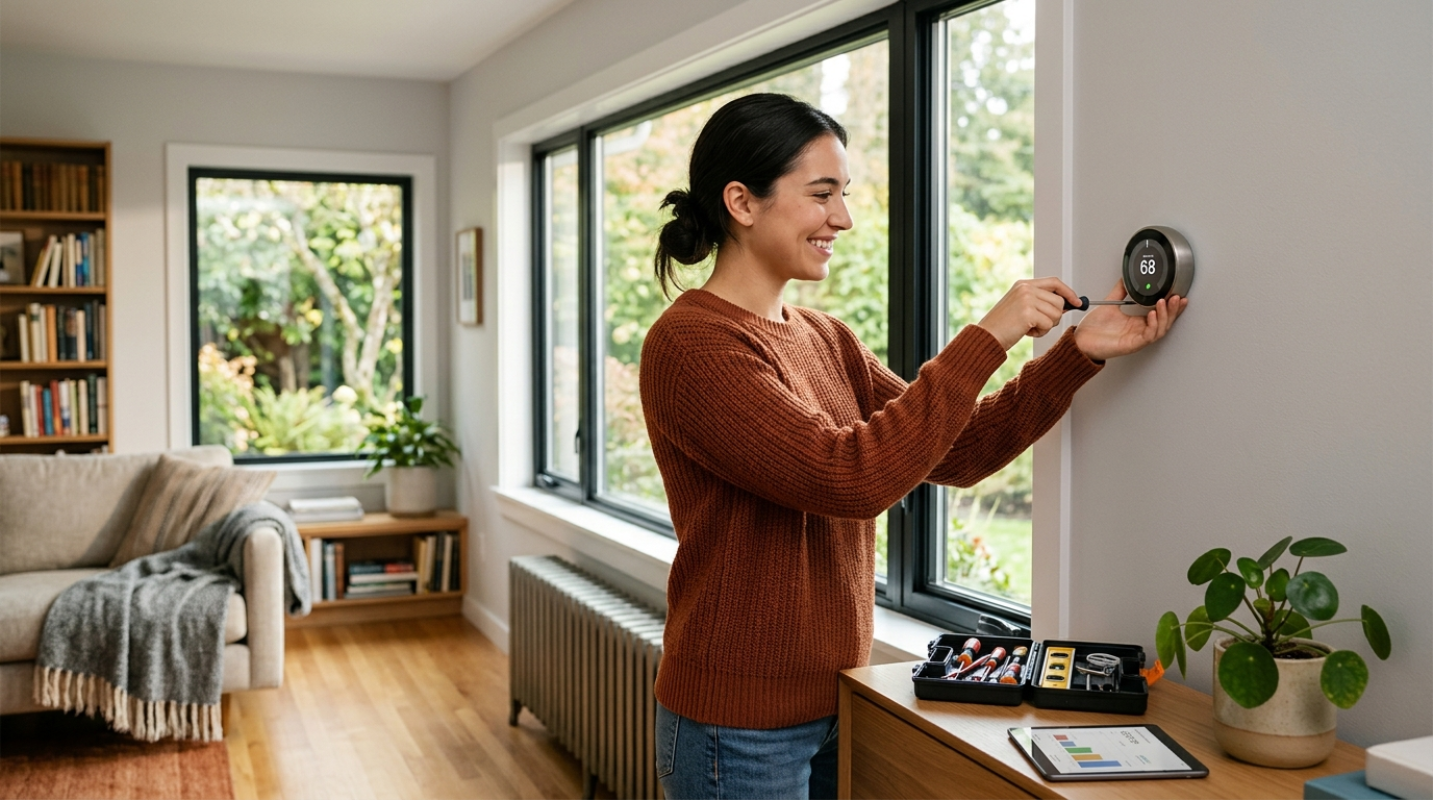
Smart thermostats from brands like Nest or Ecobee learn your daily routine. They automatically lower the heat when you go to sleep and cool things down right before you get home from work.
• Upfront Cost: These devices cost between $100 and $250.
• Annual Savings: You can expect to save 8% to 12% on heating and 15% on cooling, which translates to roughly $130 to $180 back in your pocket every year.
• Payback Period: You will recoup your initial investment in just one to two years.
Beyond climate control, smart power strips and automated plugs can eliminate phantom energy usage. This is the electricity your television, computer, and kitchen appliances draw, even when they are turned off. It is a silent drain on your wallet that you can fix with a few cheap smart plugs.
Upgrading to LED and Energy-Star Appliances
Think about the lightbulbs in your home. If you are still using old incandescent bulbs, you are burning money. Replacing those outdated bulbs with high-efficiency LEDs is a no-brainer.
An LED retrofit for a standard home costs less than $800, and even less if you handle the installation yourself. Because LEDs use up to 75% less energy and last for decades, this simple swap saves the average homeowner about $225 per year. You will get your money back in a year or two, and you won't have to climb ladders to change dead bulbs for a very long time.
When your larger appliances finally reach the end of their lives, do not just buy the cheapest replacement. Look for the Energy Star certification. These appliances must meet strict efficiency guidelines set by the government.
If you are planning a minor midrange kitchen remodel, focusing on Energy Star appliances and LED lighting is incredibly lucrative. Last year's Cost vs. Value Report shows that this project costs an average of $28,458 but adds $32,141 in resale value.³ That is a 113% return on investment before you even factor in your lower monthly utility bills.
Water Conservation as an Energy Approach
People often forget that saving water also saves energy. Every time you take a hot shower or run the washing machine, your water heater has to work. Reducing your water usage directly shrinks your gas or electric bill.
You do not need a plumber to make these changes. You can upgrade your fixtures in minutes with basic tools.
• Low-Flow Showerheads: These restrict water flow without sacrificing water pressure, which means you use less hot water without even noticing the difference.
• Faucet Aerators: These cheap screw-on parts mix air into your water stream, reducing water volume while maintaining a strong flow.
• Heat Pump Water Heaters: If your current water heater is over a decade old, replacing it with a hybrid heat pump model can slash your water heating costs by up to 70%.
The Cumulative Impact of Small Changes
When you look at these upgrades individually, they might seem small. A hundred dollars saved here, a few hundred there. But when you combine them, the financial impact compounds quickly.
High-performance homes rated under the Home Energy Rating System (HERS) save an average of $1,100 a year on energy costs compared to standard homes. You do not have to do everything at once. A phased approach is actually much friendlier on your wallet.
You can also use federal tax incentives to speed up your payback period. The Energy Efficient Home Improvement Credit (Section 25C) allows you to claim up to $1,200 per year for general weatherization, including up to $250 per door and $600 for windows. There is no lifetime limit, so you can space out your upgrades over several years to get the most from your tax savings.
According to the National Association of Realtors, housing affordability challenges are driving buyers to seek out sustainable features specifically to reduce heating and cooling costs. Nearly half of real estate agents cite tax credits and utility savings as primary drivers of buyer demand. By making these simple upgrades, you are not just saving money on your monthly bills; you are building a more valuable, highly desirable asset for the future.
Sources:
1. EcoFlow Blog
https://www.ecoflow.com/us/blog/home-upgrades-that-lower-monthly-bills
2. Arvy Estate
https://arvyestate.com/why-energy-efficient-homes-for-sale-are-worth-15-more-in-2025/
3. Zonda Media 2025 Cost vs. Value Report
https://zondahome.com/2025-cost-vs-value-report/
4. Amarr Blog
https://blog.amarr.com/a-breakdown-of-the-cost-vs-value-report
5. Energy Swing Windows
https://energyswingwindows.com/blog/how-much-value-do-new-windows-add-roi-pittsburgh
*This article on alothelp.com is for informational and educational purposes only. Readers are encouraged to consult qualified professionals and verify details with official sources before making decisions. This content does not constitute professional advice.*