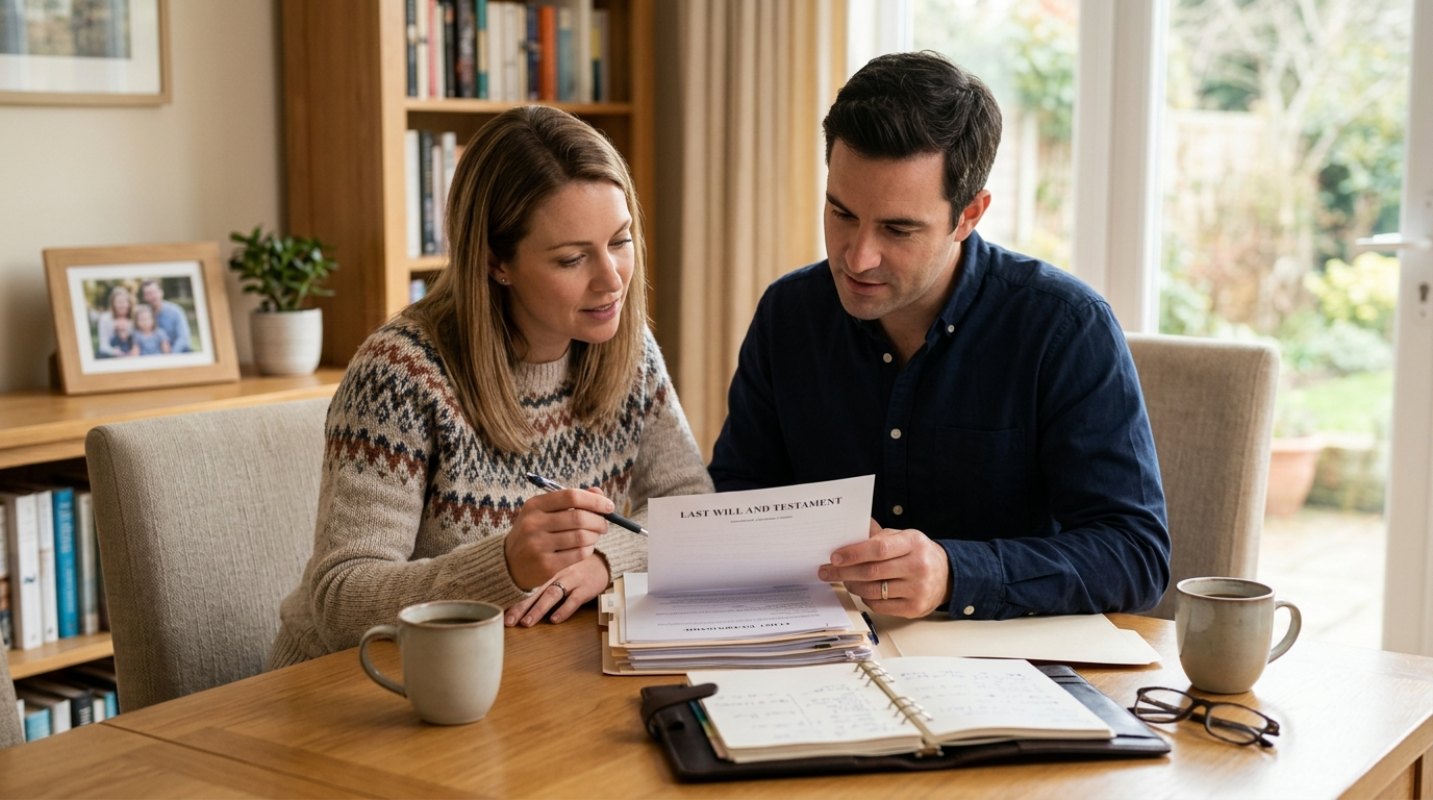
When you hear the term estate planning, what comes to mind? If you are like most people, you probably picture an elderly billionaire sitting in a mahogany-panelled office, surrounded by family members waiting to hear who inherits the private jet.
That image is a complete myth. The truth is that estate planning is not just for the ultra-wealthy or those nearing retirement. It is a basic, helpful tool for anyone who wants to protect their hard-earned assets, their loved ones, and their own peace of mind. No private jets required. Just clear, honest decisions.
So what does this actually mean for you?
Recent data reveals a fascinating shift in how we view this process. Although overall estate planning rates among Americans have dropped, younger adults are actively bucking the trend. A major study showed that only 32% of Americans had a will, which was a significant decline from previous years.¹ Yet, the percentage of young adults aged 18 to 34 with a will actually jumped by 50% over a four-year period, rising from 16% to 24%.²
Even with this positive shift, a massive gap remains. More than a third of people believe adults should have a will by age 35, but fewer than one in four actually have one by that milestone. Life is unpredictable. Taking control of your future simply means making sure your wishes are respected, no matter what happens.
Why You Need a Will Right Now
What actually happens if you pass away without a will? In the legal world, this is called dying intestate. When this happens, you do not get a say in who gets your money, your home, or even your pets. Instead, state laws and a judge make those decisions for you.
This process is called probate, and it is usually a massive headache for the people you leave behind. Most people have no idea how long or expensive this process actually is. Although many assume it is a quick administrative step, the average probate process actually takes 20 months.³ On top of the long timeline, it costs families an average of $14,000, which is roughly 3% to 7% of the estate's total value.⁴
If you want to protect your family from this administrative nightmare, a will is your best line of defence. Consider these specific areas where a lack of planning can cause chaos
• Digital Assets: You have a massive digital footprint, including online bank accounts, cryptocurrency, social media profiles, and cloud photo storage. Without a will designating a digital executor, tech companies will lock your family out of your accounts forever. A will make sure your sentimental photos and digital files are not lost.
• Unmarried Partners: Many couples live together for years without getting married. If you die without a will, state laws automatically send your assets to your biological relatives, like parents or siblings. Your partner could end up with absolutely nothing, even if you shared a home and paid the mortgage together.
• Pet Guardianship: Legally, pets are treated as personal property. If you do not name a guardian for your dog or cat in a will, they could end up in a shelter or with a relative who does not want them.
• Minor Children: For parents, this is the most important piece of the puzzle. A will is the only legal document where you can nominate a guardian to raise your kids if you are no longer here. Without one, a judge who does not know your family will make that choice for you.
Think about a real-world scenario. Imagine a young professional named Alex. He has a modest savings account, a financed car, a beloved dog, and a cloud drive packed with travel photos. He assumes he does not need a will because he is young. If Alex is unexpectedly killed in an accident, his family has to go to probate court to claim his car and savings. A major dispute breaks out between his parents and his long-term partner over who gets his dog. To make matters worse, Apple refuses to give his grieving mother access to his phone to retrieve his photos because there is no legally designated digital executor. All of this pain could have been avoided with a simple will.
Another scenario involves Sarah and Marcus, an unmarried couple in their late 20s. They bought a house together, but because of their credit scores, only Marcus's name went on the deed. When Marcus unexpectedly passed away without a will, the house automatically went to his estranged parents under state intestacy laws. Sarah had no legal right to the home and was forced to move out by his family, despite having paid half the mortgage for years.
The Core Components of a Beginner Estate Plan
An estate plan is not just a single piece of paper. It is a collection of documents that work together to protect you while you are alive and distribute your assets after you pass away. For beginners, a complete plan usually consists of three core documents.
First is the last will and testament. This is the document where you name an executor, the person responsible for carrying out your wishes, and your beneficiaries, the people who will receive your assets.
Second is the Durable Financial Power of Attorney. This document lets you choose a trusted person to manage your finances if you become temporarily or permanently unable to do so yourself. If you are in a serious accident and cannot pay your rent or manage your bank accounts, this person can step in and handle things for you.
Third is the Healthcare Power of Attorney and Advance Directive. This document appoints a healthcare proxy to make medical decisions on your behalf if you cannot speak for yourself, and it outlines your specific preferences for medical care.
There is one important detail that many people miss: beneficiary designations override your will. If you have a 401(k), an IRA, or a bank account with a Transfer on Death designation, those assets will go directly to the person named on that account, no matter what your will says. It is needed to keep these designations updated alongside your legal documents.
As Patrick Hicks, General Counsel of Trust & Will, points out, every person over the age of 18 should have an estate plan, regardless of their financial situation.⁵ Wills do far more than just distribute assets. They provide clarity when your family needs it most.
Common Pitfalls and How to Avoid Them
When you decide to start estate planning, it is easy to make mistakes that can ruin your good intentions. One of the biggest traps is relying entirely on cheap, do-it-yourself online templates without any professional review. Although these templates seem convenient, they often fail to account for specific state laws, leaving your family with a document that is legally useless.
Another common mistake is ignoring your digital life. We store so much of our lives online, from financial accounts to sentimental memories. Leaving these out of your estate plan is the digital equivalent of leaving a safe full of family heirlooms without giving anyone the combination.
Finally, many people make the mistake of keeping their plans a secret. Having open, honest conversations with your family about your wishes might feel uncomfortable, but it is the best way to prevent future conflicts. When your loved ones know exactly what you want, there is no room for guessing or arguing.
Getting started does not have to be a lot of. There are excellent modern tools designed to make this process simple, affordable, and legally sound.
Taking the First Step Toward Peace of Mind
At its core, estate planning is an act of love and help. It is about taking control of your life and protecting the people (and pets) who matter most to you. It removes the guesswork and prevents your family from facing expensive court battles during an already painful time.
Cody Barbo, founder of Trust & Will, notes that younger generations have faced significant financial headwinds, from recessions to high living costs.⁴ Because of this, they are highly protective of what they do have, making estate planning even more important.
Do not let procrastination get the better of you. You do not need a massive bank account or a house in the suburbs to justify having a plan. Reach out to a qualified professional or use a trusted estate planning service to take that first step today. Your future self and your family will thank you.
Sources:
1. Forbes - The Danger of Declining Estate Planning Rates
https://www.forbes.com/sites/matthewerskine/2024/03/20/the-danger-of-declining-estate-planning-rates/
2. PR Newswire - Trust & Will's Fourth Annual Millennial Study
https://www.prnewswire.com/news-releases/trust--wills-fourth-annual-millennial-study-examines-how-millennials-are-estate-planning-through-the-pressure-of-their-current-lives-302111007.html
3. PR Newswire - Trust & Will's Probate Study
https://www.prnewswire.com/news-releases/trust--wills-new-study-shows-most-americans-deeply-unaware-of-the-costs-timeline-and-emotional-toll-of-the-probate-process-302198801.html
4. Trust & Will - State of Probate Study
https://trustandwill.com/documents/probate-study-2024
5. Lancaster Law - Reasons Young People Should Write a Will
https://lancasterlaw.net/blog/8-reasons-young-people-should-write-a-last-will-and-testament/
*This article on alothelp.com is for informational and educational purposes only. Readers are encouraged to consult qualified professionals and verify details with official sources before making decisions. This content does not constitute professional advice.*